
The Polyvagal Theory : A Nervous System Approach to Healing?
Traditionally, the Autonomic Nervous System (ANS) was viewed as a balance between two systems: rest and digest (parasympathetic) and fight or flight (sympathetic). Polyvagal Theory introduces a three-level hierarchy, explaining how the body responds based on its unconscious assessment of safety or danger a process known as neuroception. The Autonomic Nervous System (ANS) controls all involuntary functions, such as breathing, heart rate, and digestion. Polyvagal Theory explains that it works in three states, not just two. These states are based on how safe or threatened your body automatically feels at any given moment.
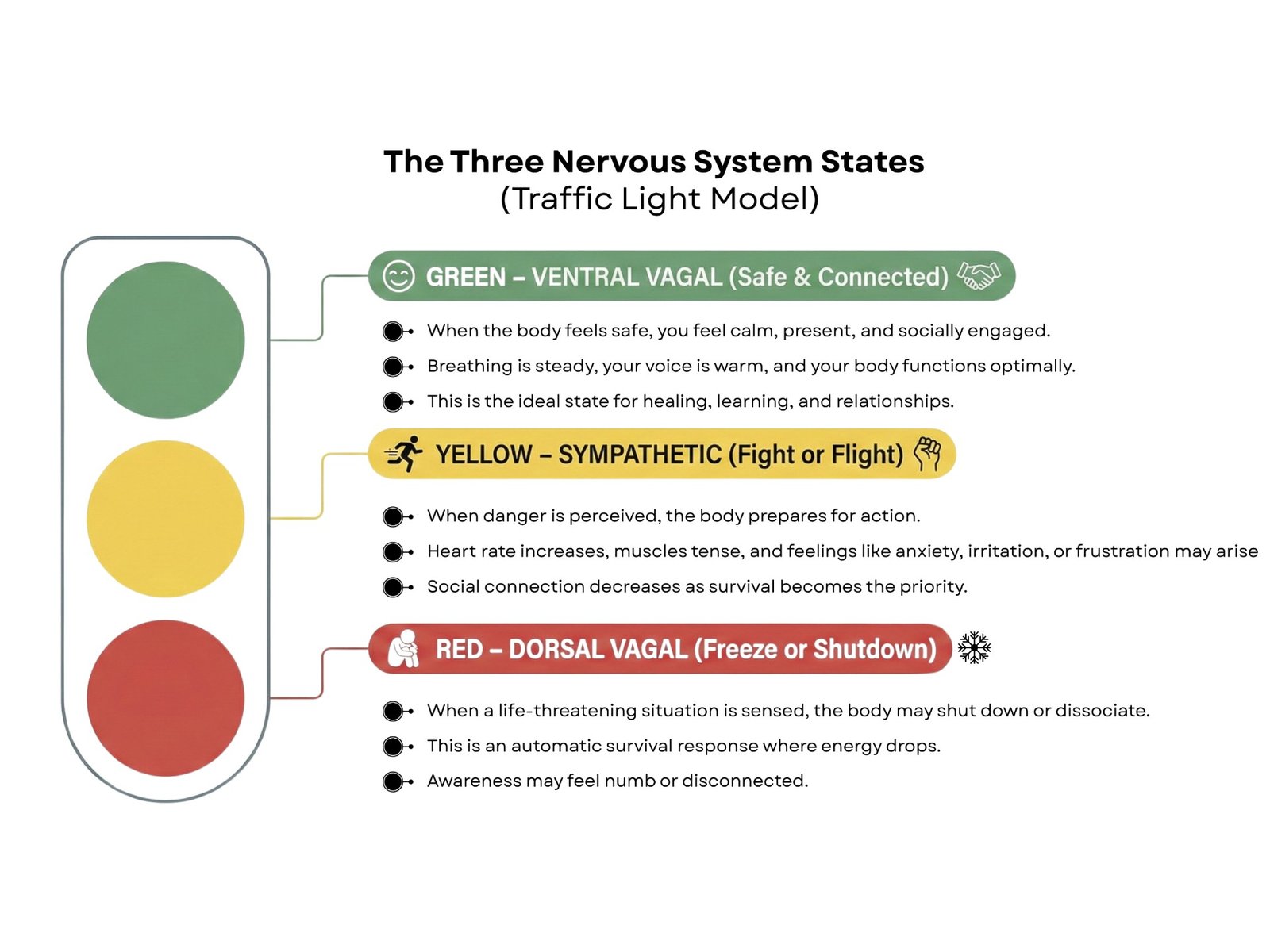
The Three Nervous System States (Traffic Light Model)
The nervous system naturally moves through these states in sequence, shifting from safety to survival when needed.
Green – Ventral Vagal (Safe & Connected). When the body feels safe, you feel calm, present, and socially engaged. Breathing is steady, your voice is warm, and your body functions optimally. This is the ideal state for healing, learning, and socializing.
Yellow – Sympathetic (Fight or Flight). When danger is perceived (real or imagined), the body prepares for action. Heart rate increases, muscles tense, and feelings like anxiety, irritation, or frustration may arise. Social connection decreases as survival becomes the priority.
Red – Dorsal Vagal (Freeze or Shutdown). When a life-threatening situation is sensed, the body may shut down or dissociate. This is an automatic survival response where energy drops and awareness may feel numb or disconnected.
The Role of the Vagus Nerve
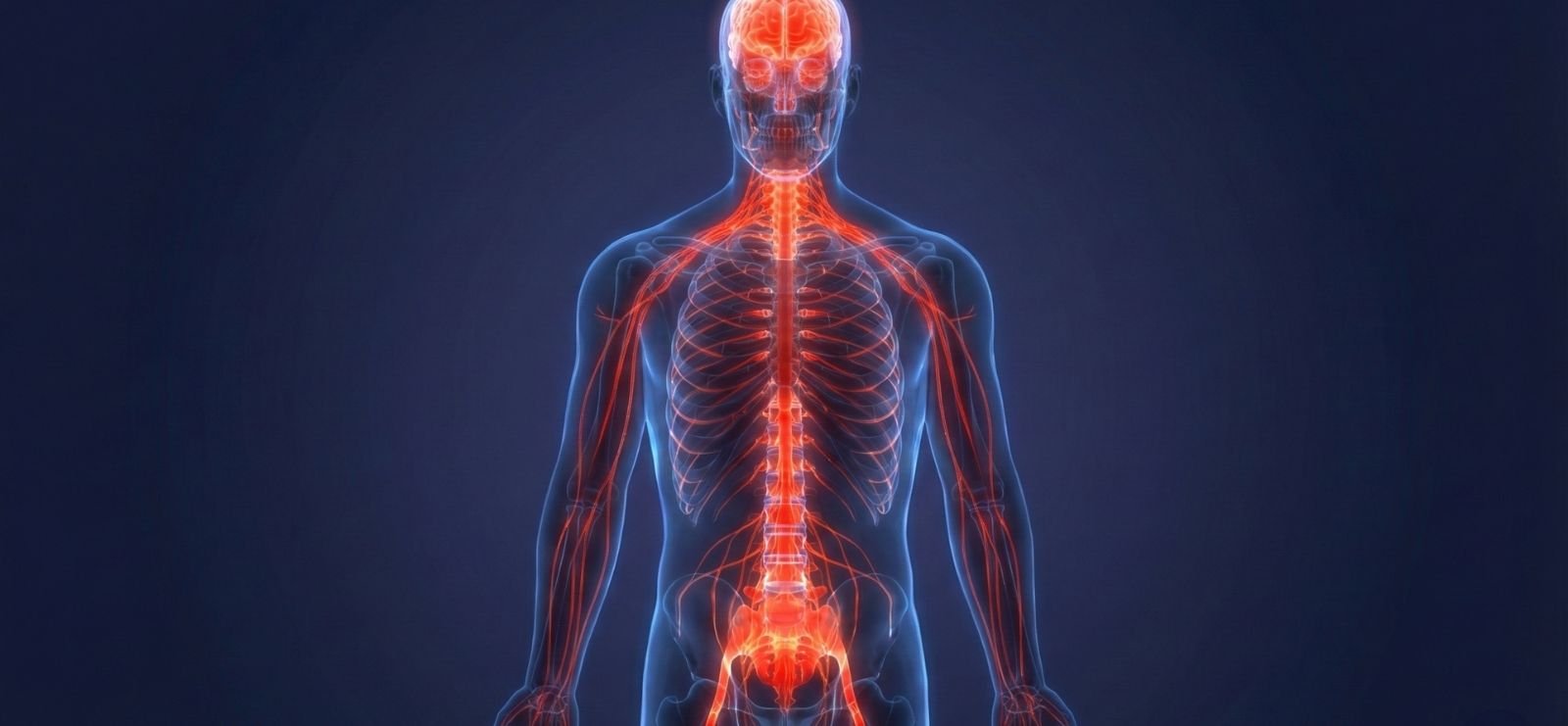
The vagus nerve often referred to as the “wandering nerve” is one of the most influential yet commonly overlooked components of the nervous system. As the longest cranial nerve, it extends from the brainstem through the chest and into the abdomen, linking the brain with vital organs such as the heart, lungs, and digestive system. Because of its extensive reach, it plays a crucial role in physical health, emotional balance, and mental well-being.
Acting as the body’s primary communication pathway between the brain and internal organs, the vagus nerve constantly sends signals that help determine whether the environment feels safe or threatening.
Simple Ways to Support a Sense of Safety
By understanding Polyvagal Theory, you can intentionally activate the Green (social engagement) state in yourself by:
Breathing slowly and deeply to calm your nervous system
Using a warm, gentle voice, smile, and make eye contact to signal safety
Listening to calm, melodic music
Spending time with people you trust and enjoy
Creating quiet, welcoming environments
Signs of Poor Vagus Nerve Function
When vagal tone is low or the nerve becomes impaired, symptoms can show up in many areas of health. Common indicators include:
Dizziness or lightheadedness
Ongoing fatigue
Brain fog or poor concentration
Restlessness or difficulty relaxing
Chronic inflammation
These signs suggest the nervous system may be stuck in survival mode.
The Vagus Nerve: A Foundation for Long-Term Health
The vagus nerve plays a central role in resilience, emotional regulation, digestion, immunity, and overall well-being. Learning how to support it empowers you to create lasting health, calm, and recovery. As awareness grows, the benefits of chiropractic care for vagus nerve function are becoming increasingly recognized.
How Chiropractic Care Can Help
Chiropractic care aims to improve nervous system function, including the vagus nerve. Several chiropractic methods may enhance vagal activity:
Spinal Adjustments. Correcting spinal misalignments helps remove interference from nerve pathways, improving autonomic regulation.
Cranial Sacral Therapy. This gentle technique relieves tension affecting cranial nerves, including the Vagus Nerve, improving brain-body communication.
Lifestyle & Stress-Reduction Coaching. Chiropractors often provide guidance on posture, breathing, stress management, and lifestyle habits that support nervous system balance.
Regular chiropractic care can help restore vagal tone and improve overall autonomic health. When combined with breathing, mindfulness, and gentle movement, chiropractic care can help the nervous system shift out of chronic stress and back into balance. In summary, chiropractic care acts as a “reset” for the nervous system, reducing the physical noise that keeps the brain in a state of alarm and allowing it to return to a natural rhythm of safety and recovery.
CLICK TO BOOK AN APPOINTMENT AT OUR CLINIC TODAY
At the Decarie Square Wellness Chiropractic Clinic, we believe the body works as one connected system. The spine, nervous system, muscles, and joints are all connected to each other, affecting the way our bodies maintain and restore their health. Dr. Goel combines a variety of treatments that reflect this holistic approach so that your body can be resilient in facing everyday challenges.
Chiropractic care is a safe, efficient, and effective way not only for eradicating the pain but also to address the underlying cause. Remember, if left untreated, vertebral subluxations can begin to affect other aspects of your overall health and well-being. It is important to be aware of the signs and symptoms so that you can quickly identify vertebral subluxations and seek treatment. If you are dealing with vertebral subluxations, contact our friendly clinic to book an appointment, for an accurate diagnosis and treatment of your condition. You can contact us online or call 514.344.6118.